


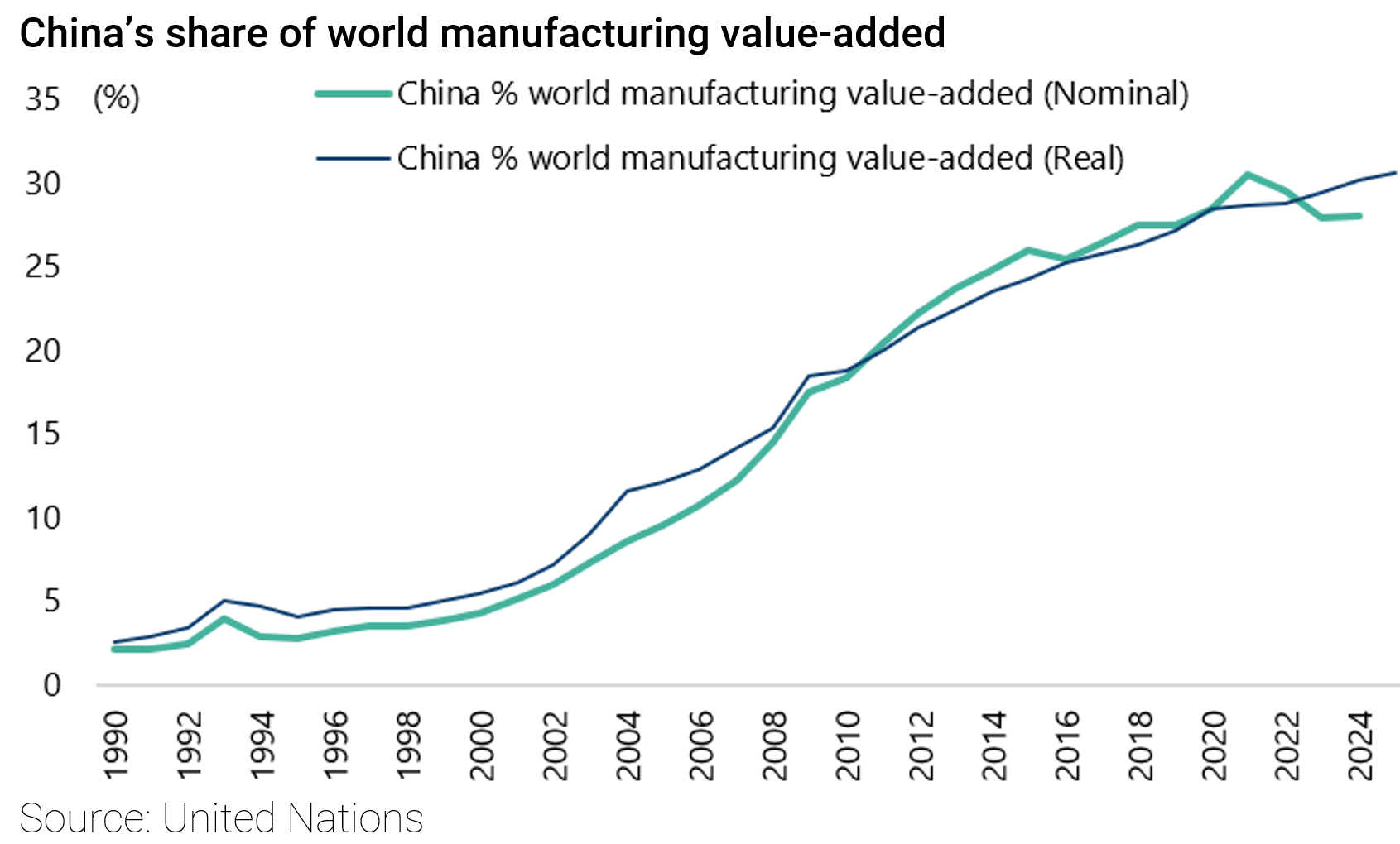
China, accounting for 20% of the export of world manufactured goods and around 30% of world manufacturing output (value-added), has no interest in a protracted conflict in the Middle East in pure economic terms.
It is the case that China, prior to the conflict, was obtaining about 40% of its crude oil and 30% of its LNG imports from the Middle East.
Still, China is clearly far better positioned than the US as regards strategic oil reserves.
America’s strategic oil reserves have now declined to 307.65m barrels, the lowest since March 1983, while Japan’s are estimated at 263m barrels, the world’s third-largest strategic oil reserves.
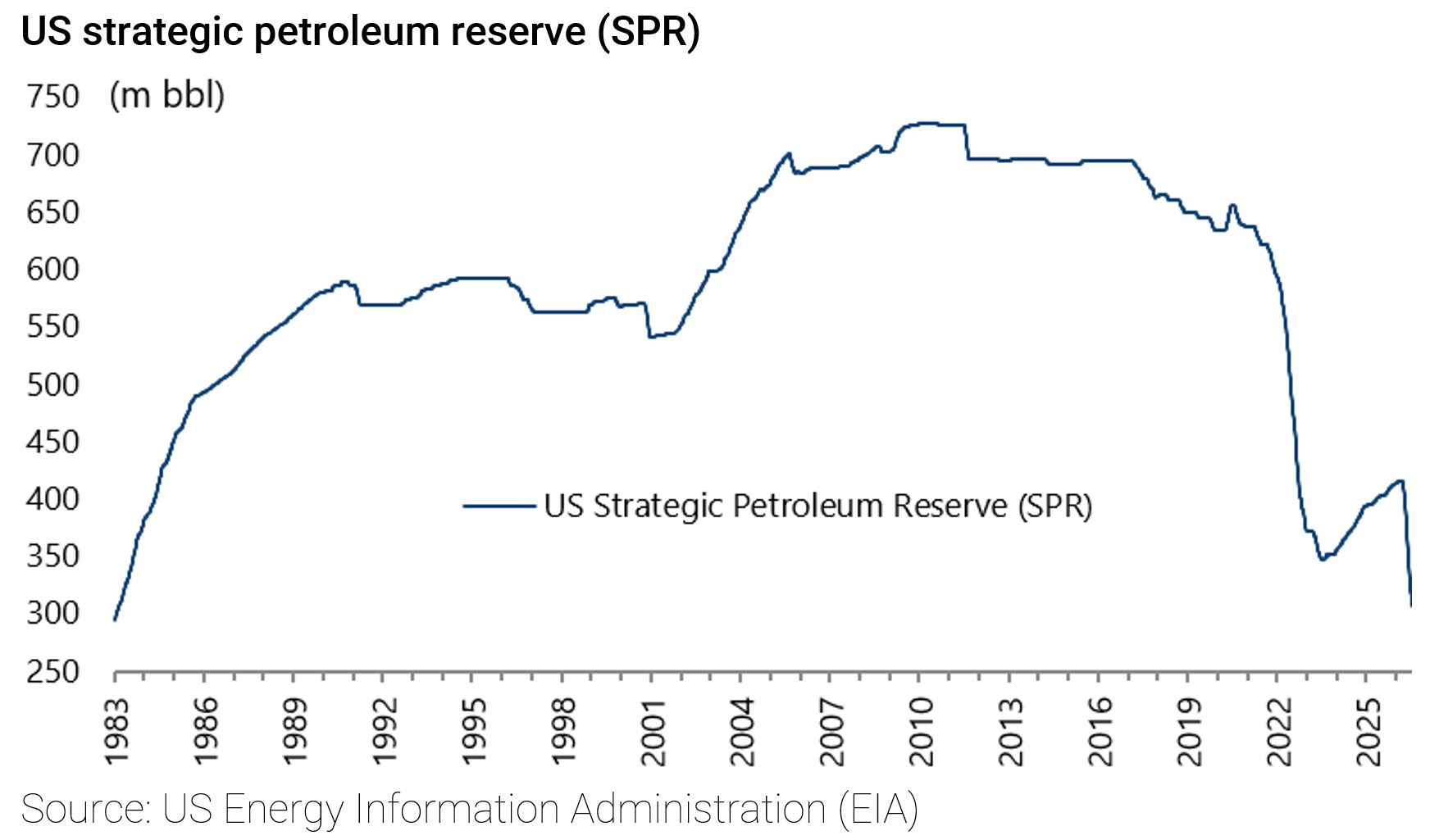
By contrast, China remains much more comfortably positioned with an estimated 1.5bn barrels, according to the US Energy Information Administration (EIA).
Still, although China is estimated to have very large oil reserves compared with other oil importers, the Iran War seems to have accelerated China’s already formidable progress on renewable energy, previously discussed here (China Needs America Less Than You Think, 14 May 2025), courtesy of both the scale of the build-up and advances in battery storage technology.
Thus, President Xi Jinping called on 6 April about a month after the initial US-Israel attack on Iran for efforts to accelerate the planning and construction of a new energy system, alongside nuclear and coal, to boost energy security (see Reuters article: “China’s Xi urges faster development of new energy system as Middle East war continues”, 6 April 2026).
Among oil importers, China is unlikely to be alone in this reaction.
Indeed, the likelihood is that the already extended closure of the Strait of Hormuz, now lasting more than five months, will markedly accelerate a pivot towards renewable energy that is already underway, thereby taking advantage of the improvements in battery storage technology, where China’s CATL is the market leader.
The company has around a 40% share in global EV batteries and a 30% share in ESS energy storage.
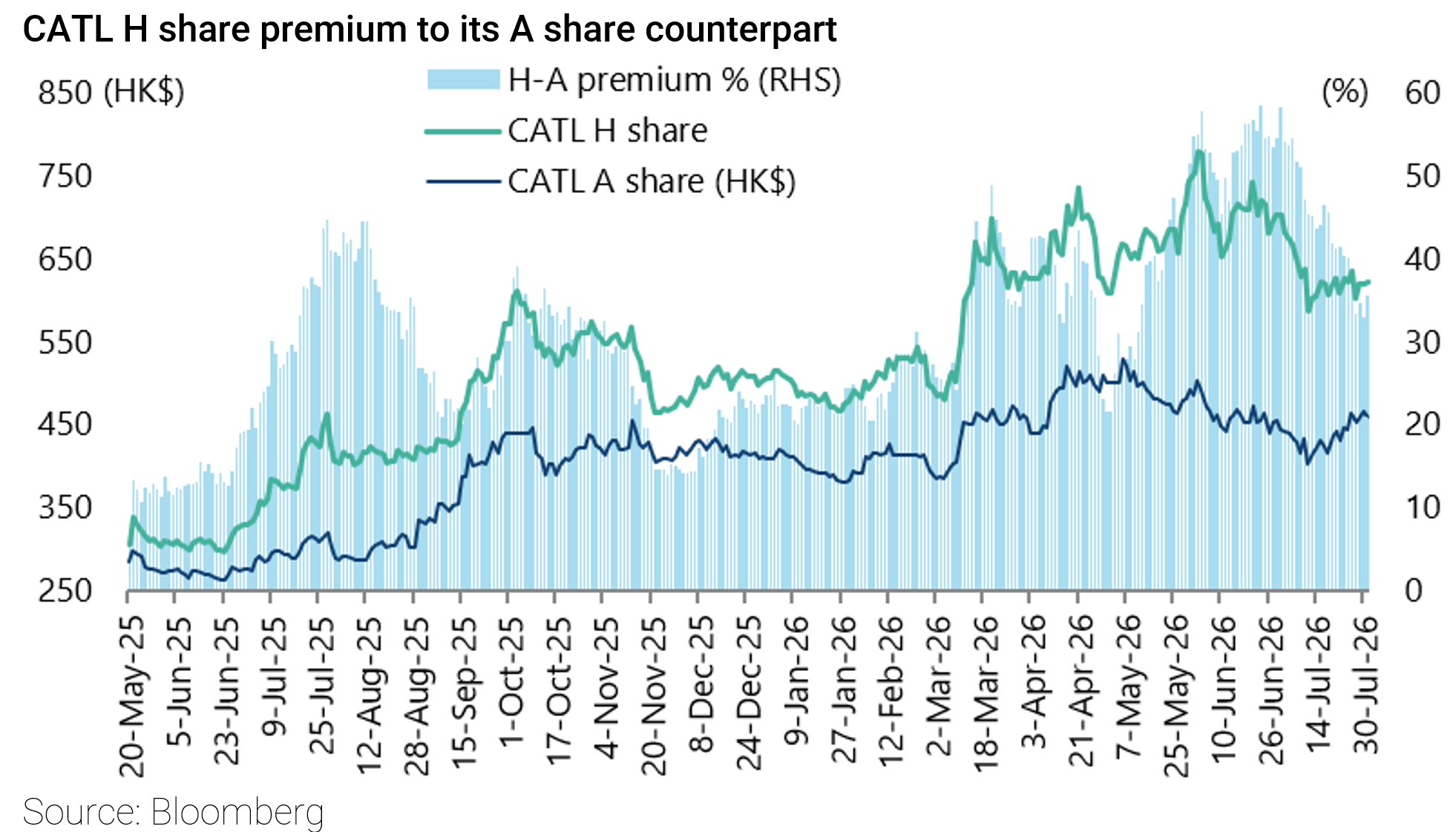
In this respect, one way of looking at CATL is the “TSMC of electrification.”. The stock, quoted in Hong Kong, currently trades at a 36% premium to its Shanghai listing.
Iran is Likely Accelerating the World’s Move Away from Oil
Returning to the impact of the Iran War on oil importers, an article in the UK’s Daily Telegraph described a mood of “panic and dread” among oil and gas executives at the CERAWeek summit, an annual conference for the energy industry organised by S&P Global, held in Houston in late March again shortly after the war commenced (see The Telegraph article: “Trump is an utter disaster for the world’s oil and gas industry” by Ambrose Evans-Pritchard, 17 April 2026).
Instead of celebrating the windfall profits from the conflict, the focus was reportedly on the existential risk posed by, in this writer’s view, extremely realistic concerns that oil importing countries will react to the shock of the closure of the Strait of Hormuz by opting for accelerating the expansion into renewables, or what the article described in what could become a new buzzword as “electrotech.”
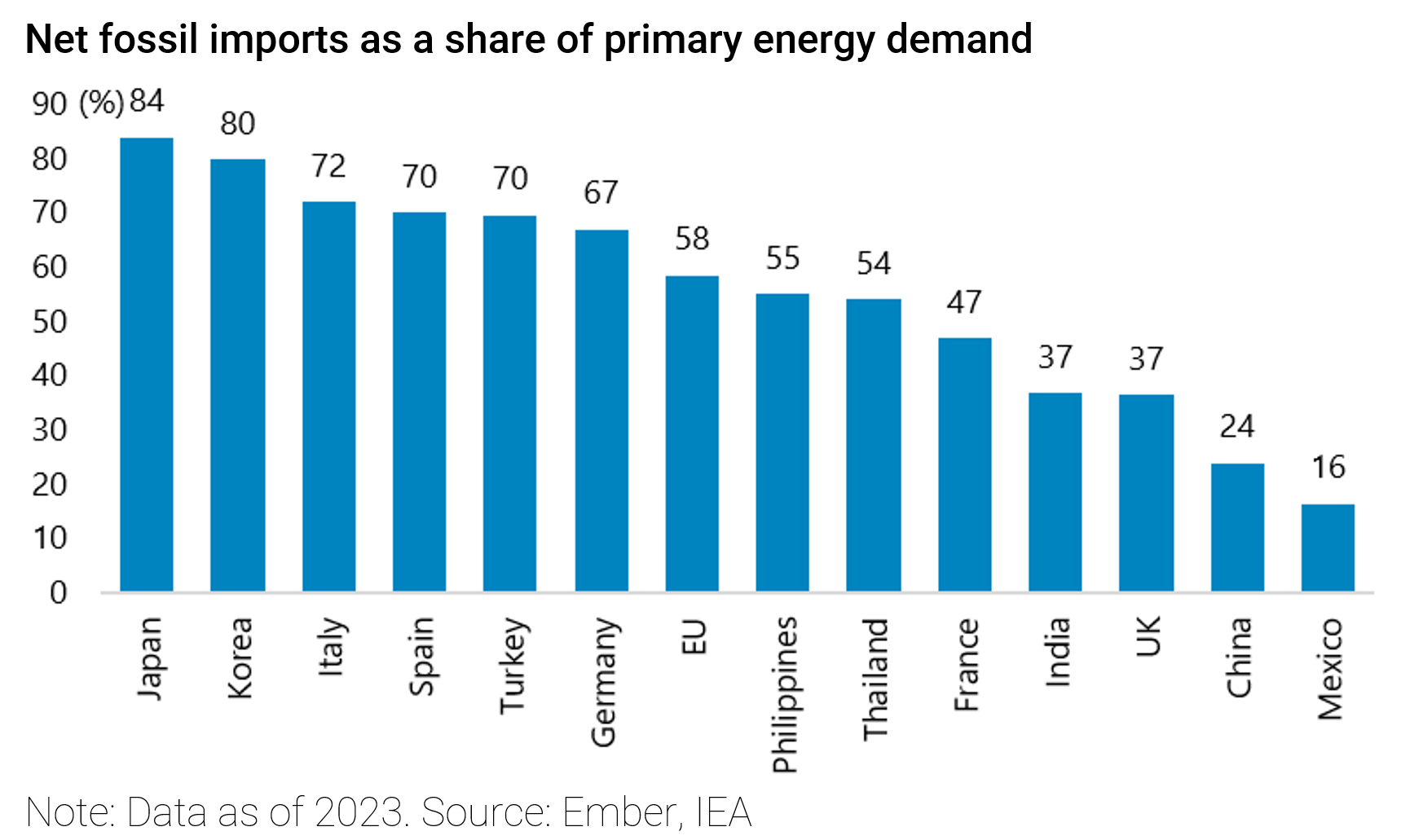
The incentive to reduce dependence on Middle East petrostates or, for that matter, on Texan frackers, is massive, particularly in Asia, as Japan and South Korea still have a huge dependence on net fossil fuel imports as a share of primary energy demand.
That figure is 84% for Japan and 80% for South Korea compared with “only” 37% for India and 24% for China.
This is why South Korea President Lee Jae-myung said on 30 March: “This is an emergency situation, and we must shift to renewable energy very quickly”.
So, the base case has now become that the Trump administration, courtesy of the attack on Iran, will turn out to be a disaster for the oil and gas industry, even as it has championed that industry and attacked renewable energy with its association in the US with green “woke” politics.
This is because the China example has already demonstrated that solar, combined with battery storage, is cheaper than coal on the mainland.
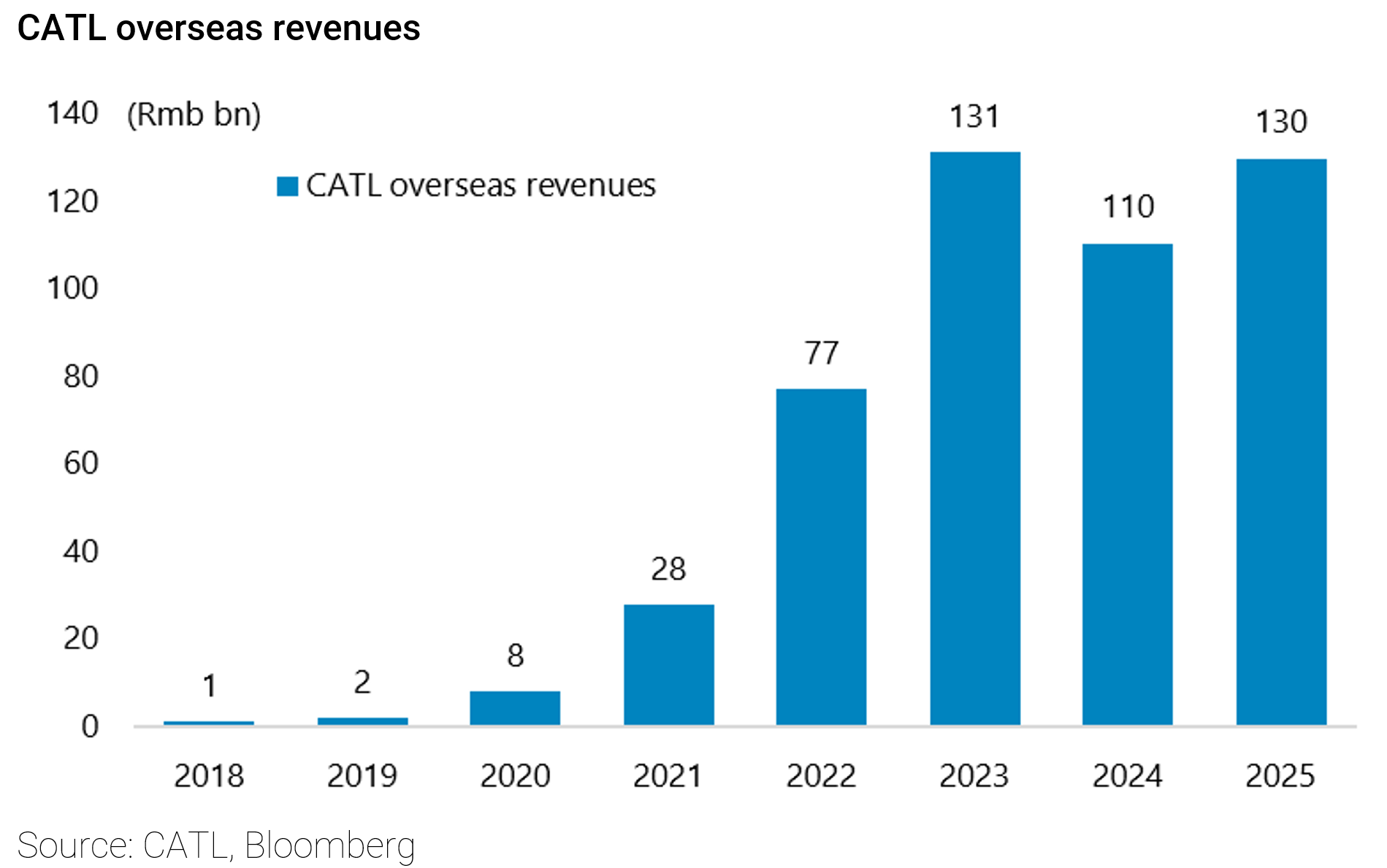
And that technology can now be applied elsewhere and will be, increasingly, as can be seen in CATL’s surging exports.
CATL’s overseas revenues have risen by an annualised 75% over the past five years from Rmb8bn in 2020 to Rmb130bn (US$19bn) in 2025.
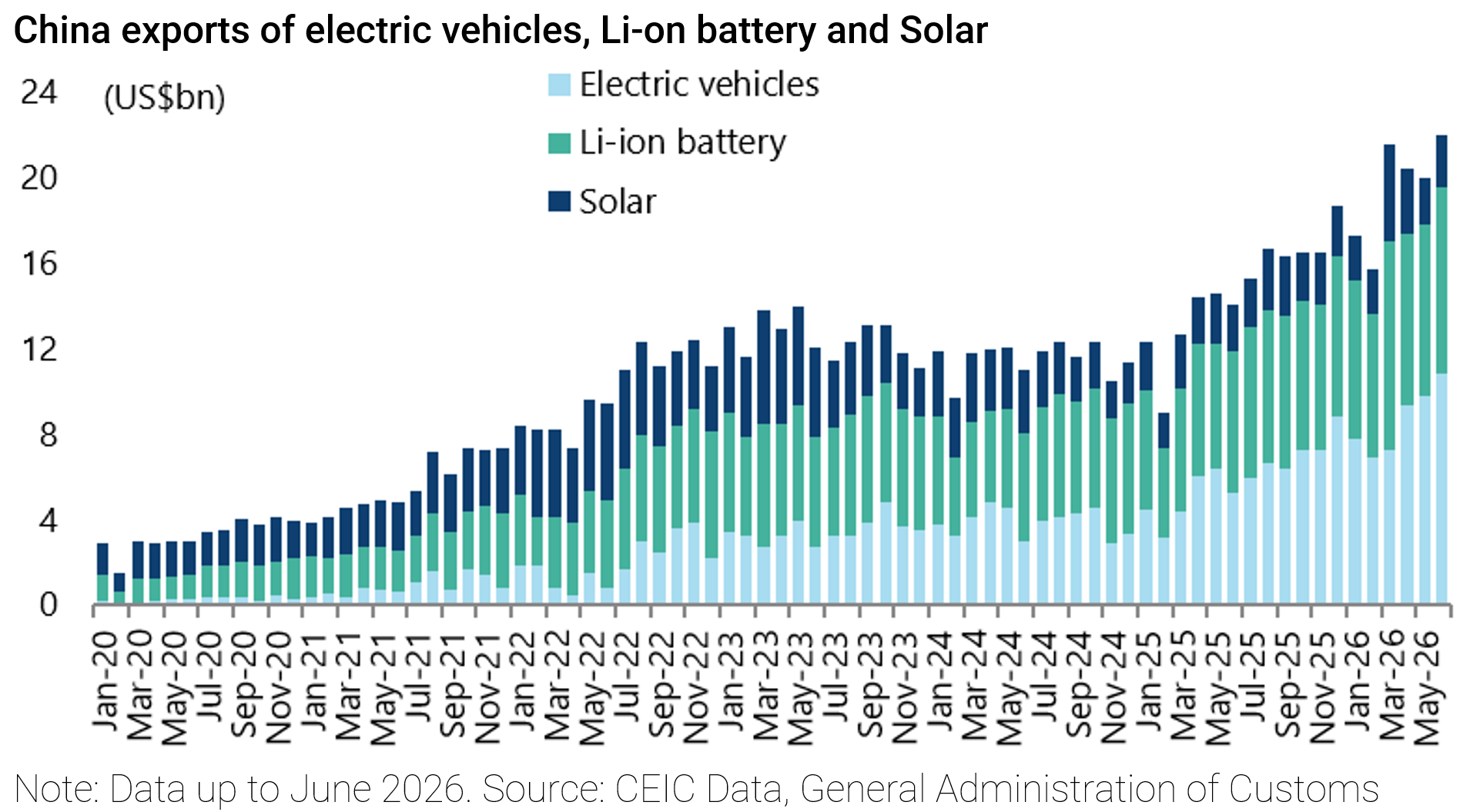
Meanwhile from a national standpoint, China’s exports of EVs, Li-ion batteries and solar surged by 56% YoY to a record US$22.2bn in June.
China is Clearly Winning the Energy Race
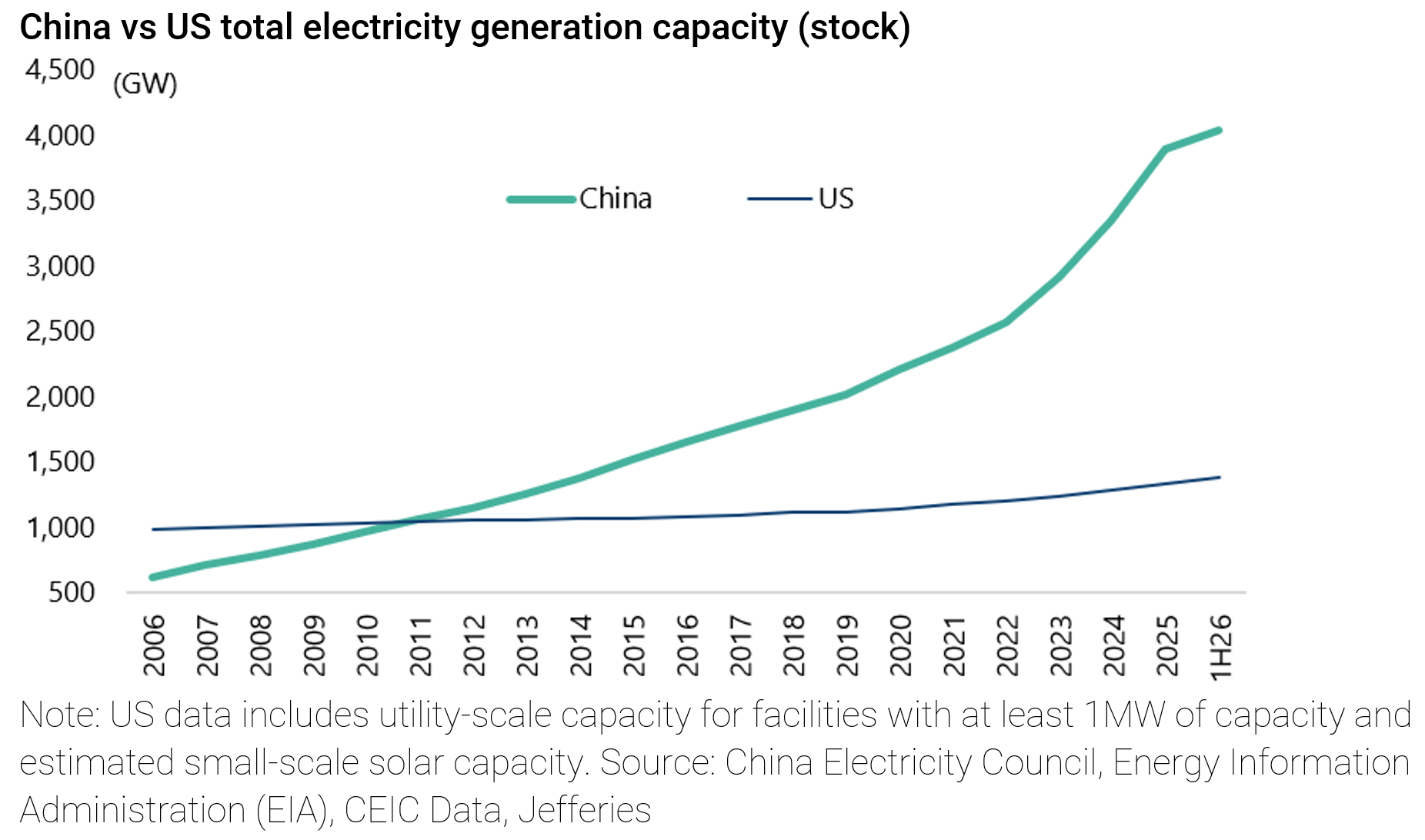
Meanwhile, in a more macro context, China has massively increased its power generation capacity relative to the US in recent years as shown in the charts below.
Thus, China’s power generation capacity increased by 547GW in 2025 and 146GW in January-June 2026, while US electricity generation capacity increased by only 57GW in 2025 and 42GW in January-June.
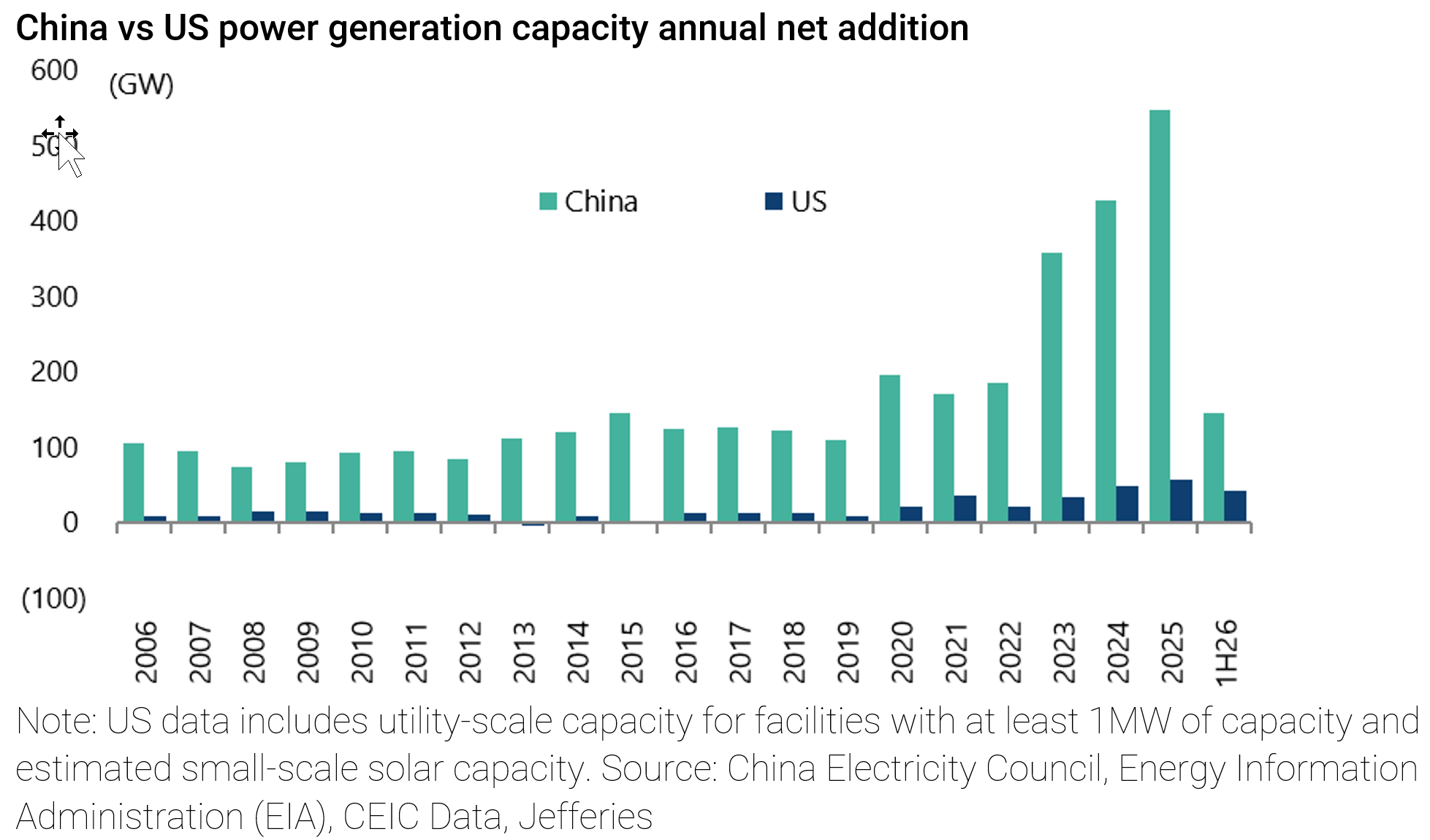
On a stock basis, China’s electricity generation capacity has increased from 2,010GW at the end of 2019 to 4,043GW at the end of June 2026, while US electricity generation capacity is up from 1,122GW at the end of 2019 to 1,382GW at the end of June.
This massive advantage over the US in energy is also one reason why China is likely to end up as the winner in AI.
The other is the appeal of its cheap open-source large language models of which the latest example is Moonshot AI’s Kimi K3 launched on 17 July.
The views expressed in Chris Wood’s column on Grizzle reflect Chris Wood’s personal opinion only, and they have not been reviewed or endorsed by Jefferies. The information in the column has not been reviewed or verified by Jefferies. None of Jefferies, its affiliates or employees, directors or officers shall have any liability whatsoever in connection with the content published on this website.
The opinions provided in this article are those of the author and do not constitute investment advice. Readers should assume that the author and/or employees of Grizzle hold positions in the company or companies mentioned in the article. For more information, please see our Content Disclaimer.
About Author