

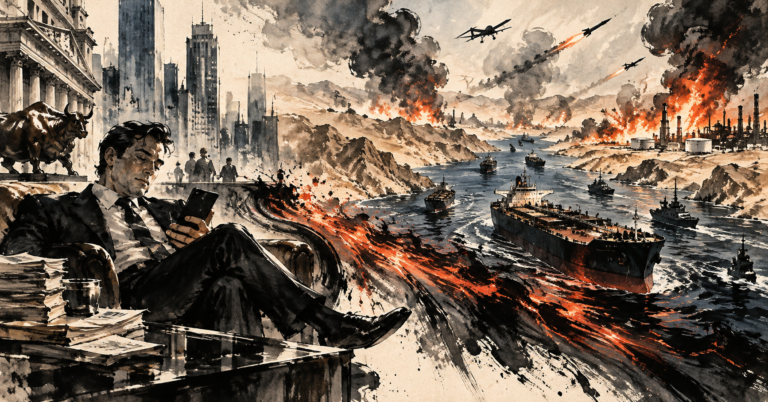

Investors would like to forget all about it. But geopolitics remains an issue for markets.
For now renewed escalation looks more likely in the stand-off with Iran than resolution.
Wags have called it the Memorandum of Misunderstanding.
But that assumes the 47th president actually read the 14-point MoU signed by the US and Iran back on 17 June. This writer doubts that.
Donald Trump actually signed it during a dinner with French President Emmanuel Macron at the Palace of Versailles.
What has become clear since is that outright conflict has resumed between the US and Iran and that Donald Trump, the man who got elected on the “no more wars” agenda, is in a trap of his own making in the sense that time is on Iran’s side in terms of the growing impact of energy-related shortages.
Meanwhile, those on the Iranian side who favoured negotiations have been discredited since the terms of the MoU were never honoured from almost the start of the supposed 60-day negotiation period.
On the issue of the Strait of Hormuz itself, the MoU stated that Iran will “make arrangements using its best efforts for the safe passage of commercial vessels, with no charge for 60 days only”.
For this reason, this writer hears that real control in Iran is now firmly in the grip of Ahmad Vahidi, the Commander-in-Chief of the Islamic Revolutionary Guard Corps (IRGC), in terms of the management of the Strait of Hormuz and the related military strategy.
By contrast, the position of Iranian President Masoud Pezeshkian will have been weakened.
Iran says “You Are With us Or Against Us”
Meanwhile the Iran response in terms of its renewed attacks on US bases in the Gulf in July, in response to seven consecutive nights of US attacks on Iran, sent the message to the Gulf states that “you are either with us or against us” in terms of allowing US military bases to operate in their countries.
In this respect, the Tehran agenda is increasingly clear. That is that it wants the US presence out of the region.
Whereas for the Gulf states themselves, they must increasingly be asking themselves what exactly the US security guarantee is getting them in the sense that they are being attacked almost because of that presence.
In this respect, there has been an interesting divergence between the attitudes of Saudi Arabia and the UAE.
Most importantly, Riyadh did not allow its territory to be used for the latest US strikes while it also sent a quite senior delegation to attend July’s funeral of former Iranian supreme leader Ayatollah Ali Khamenei which, according to Iran state media, was attended by about 43m people.
Saudi’s strategic position was also improved by the fact that it had been able to use its East-West pipeline to Yanbu on the Red Sea and the Houthis, traditionally allies of Iran, were not causing trouble in terms of reducing access to the Red Sea.
The Houthis May be Much More than Just an Iran Proxy
But that has now changed in a dramatic way which has materially increased risks for Saudi Arabia.
Thus, there is now a full-scale war going on between Yemen’s so-called Houthis, more properly known as Ansar Allah, and Saudi Arabia as a result of Saudi escalation.
The Strait of Hormuz remains essentially closed, while the situation has been further aggravated by the Houthis’ decision on 20 July to block Saudi ships’ access to the Red Sea which by all accounts has been enforced.
On this point, the Houthis said in July that they fired ballistic missiles at Saudi oil tankers in the Rea Sea for violating the blockade (see Aljazeera article: “Yemen’s Houthis claim missile attack on Saudi Arabia oil tanker”, 28 July 2026).
This move was seemingly triggered by Yemen’s Saudi-backed army attack on Sanaa airport, the capital of Yemen, on 13 July to prevent an Iranian civilian plane from landing which carried passengers who had attended the funeral of the late Ayatollah Ali Khamenei (see The Times of Israel article: “Yemen’s Saudi-backed army bombs Houthi-held Sanaa airport to block Iranian plane”, 13 July 2026).
It is a complete mystery to this writer why Saudi should have encouraged such an attack given its dependence on the East-West pipeline which had spared Saudi many of the problems facing most of the other Gulf nations since the closure of the Strait of Hormuz, in terms of lost export revenues.
Despite the advent of AI and the supposedly ultra efficient information age, there continues to be remarkable ignorance about what is going on in this conflict, partly because of a news blackout and partly because of general ignorance with the “Houthis” long portrayed in the Western media as flip-flop wearing bandits hanging out in caves.
This writer has done a little checking and the facts do not appear to fit the perception.
The Houthis govern an area in Yemen where about 70% of the country’s population of 43m live.
Moreover, just as Persia is an ancient civilization in the case of Iran, so is Yemen dating back 7,000 years this writer reads.
Still there is a more relevant historical point dating back to the last century.
That is Yemen’s claim to the three disputed provinces of Asir, Najran and Jizan which Saudi Arabia took control of in 1934 with help from the British.
The current war overlaps with these so-called “lost provinces” with the Houthis having their origins in Zaydi Shia Islam dates back to the late 9th century. Moreover, there are cross border tribal links with these provinces in the south of Saudi Arabia.
The conclusion from the above is that the situation is much more complicated than the Houthis simply acting as some kind of Iran proxy and also poses a much greater potential threat to Saudi stability than many suppose.
This is why the Saudi decision to attack the airport of Sanaa in July looks an ever greater miscalculation.
For now the Houthis appear to have control of the Bab al-Mandab Strait, the Red Sea chokepoint. They have also not confined their attacks to Saudi’s East-West pipeline, which used to process 7m barrels of oil a day, but have also attacked oil refineries in the West of Saudi as well as the Riyadh airport on several occasions over the past week as has been widely reported and also most recently the headquarters of Aramco in Dhahran.
These are historic developments with potentially serious implications.
This writer will not get further into the details of Middle East politics, save to note that they are fiendishly complicated.
This is why negotiations should, ideally, be delegated to professionals in America’s diplomatic corps which is certainly not the approach of the Trump administration which has essentially been flying blind.
All of the above must have been very distressing to the Pakistani negotiators who spent so much time in negotiating the original MoU.
This is why the official line out of Islamabad is that the MoU is “suspended rather than irretrievably extinguished”.
This writer has a very hard time believing in that outcome.
Clearly, Donald Trump can do U-turns at any time, as has been demonstrated on numerous occasions in his presidency.
But that is not a reason for the other side to commit to renewed negotiations given the by-now chronic loss of trust. This is why the stance of Iran remains consistent.
That is that it will only negotiate on the basis of the MoU signed by Trump.
World Conflict is Driving Inflation Through the System
Meanwhile, in terms of the impact of the Middle East conflict on prices, there remains a big difference between the price of crude oil quoted in world financial markets and what people are actually paying in real life.
For inflation is also kicking in through the likes of higher freight, industrial fuel and transportation costs, which are not immediately reflected in the global price of a barrel of oil.
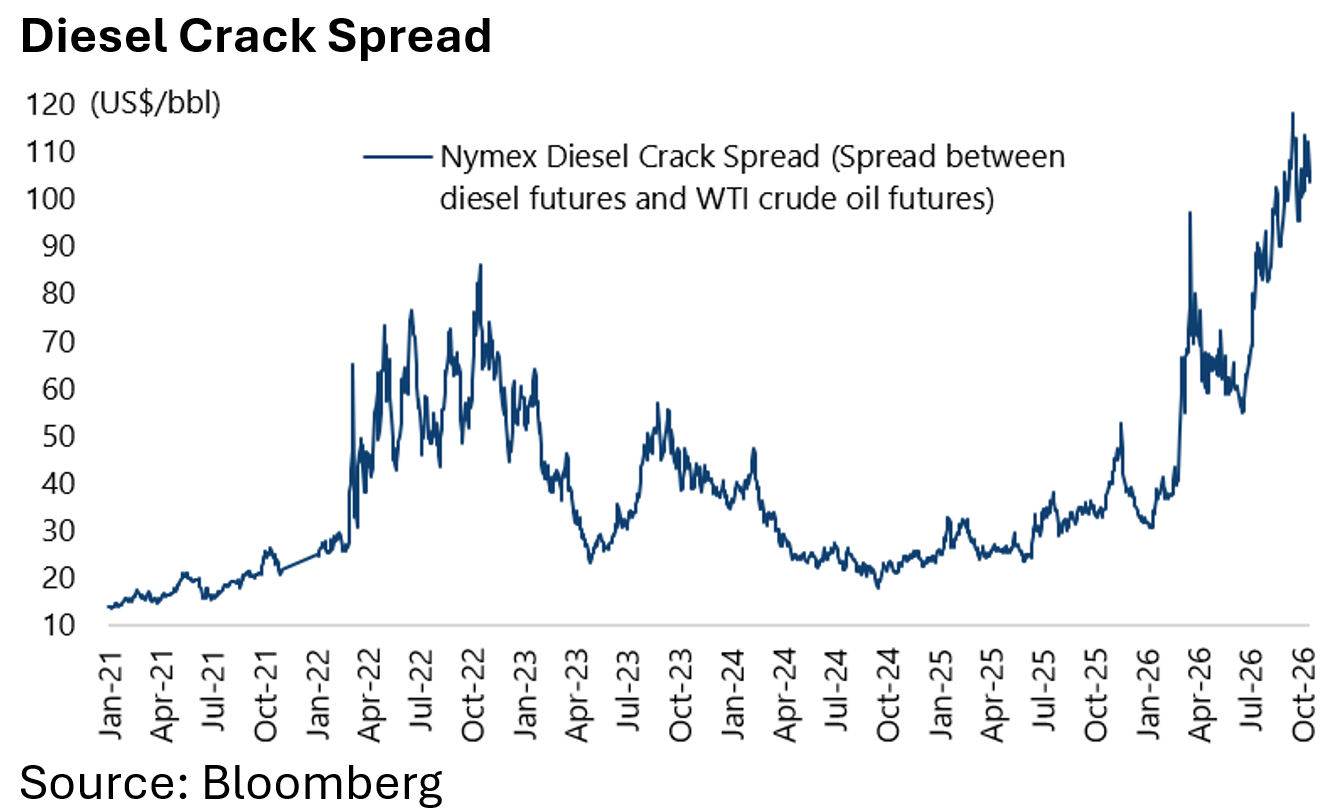
This is why the diesel crack spread is a better reflection of reality.
The Diesel Crack Spread, which measures the price difference between diesel futures and WTI crude oil futures, has risen from US$53/bbl in mid-June to a record US$119/bbl in mid-September and is now US$103/bbl.
Then there is also the growing impact on fuel and food and other prices as a result of the escalation in the Ukraine-Russia conflict.
There is, for example, growing evidence that Ukraine has become essentially landlocked because of Russia’s recent attacks on Odesa and other Black Sea ports.
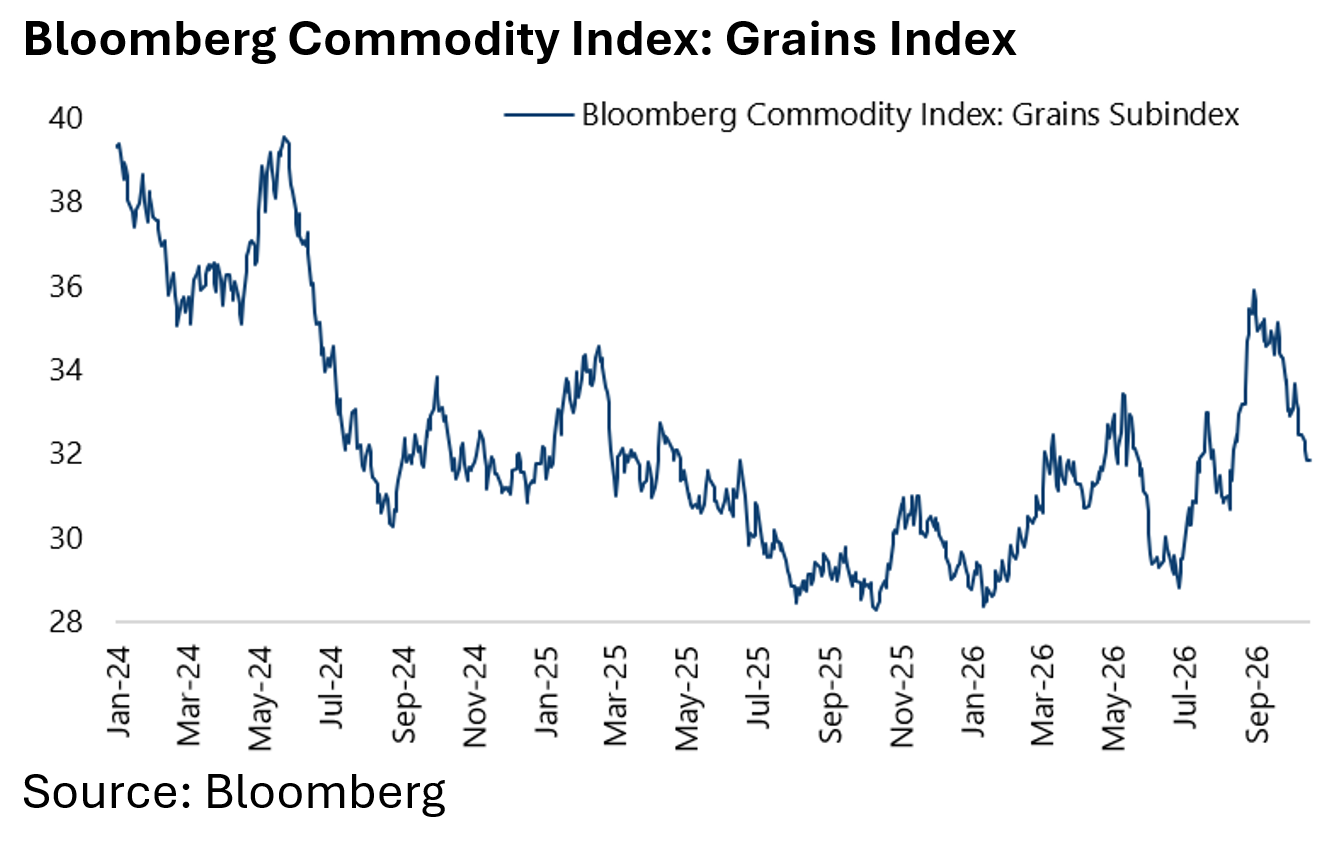
This continues to put upward pressure on grain prices.
The Bloomberg Commodity Grains subindex has risen by 12% from a recent low in late June despite the recent correction.
Meanwhile the US inflation data published last week also shows clear evidence of the impact of rising energy prices.
US headline CPI rose by 0.6% MoM and 3.7% YoY in September, up from 3.4% YoY in August and above consensus estimates of 3.6% YoY.
While core CPI rose by 2.6% YoY in September, up from 2.4% YoY in August and above consensus estimates of 2.5% YoY.
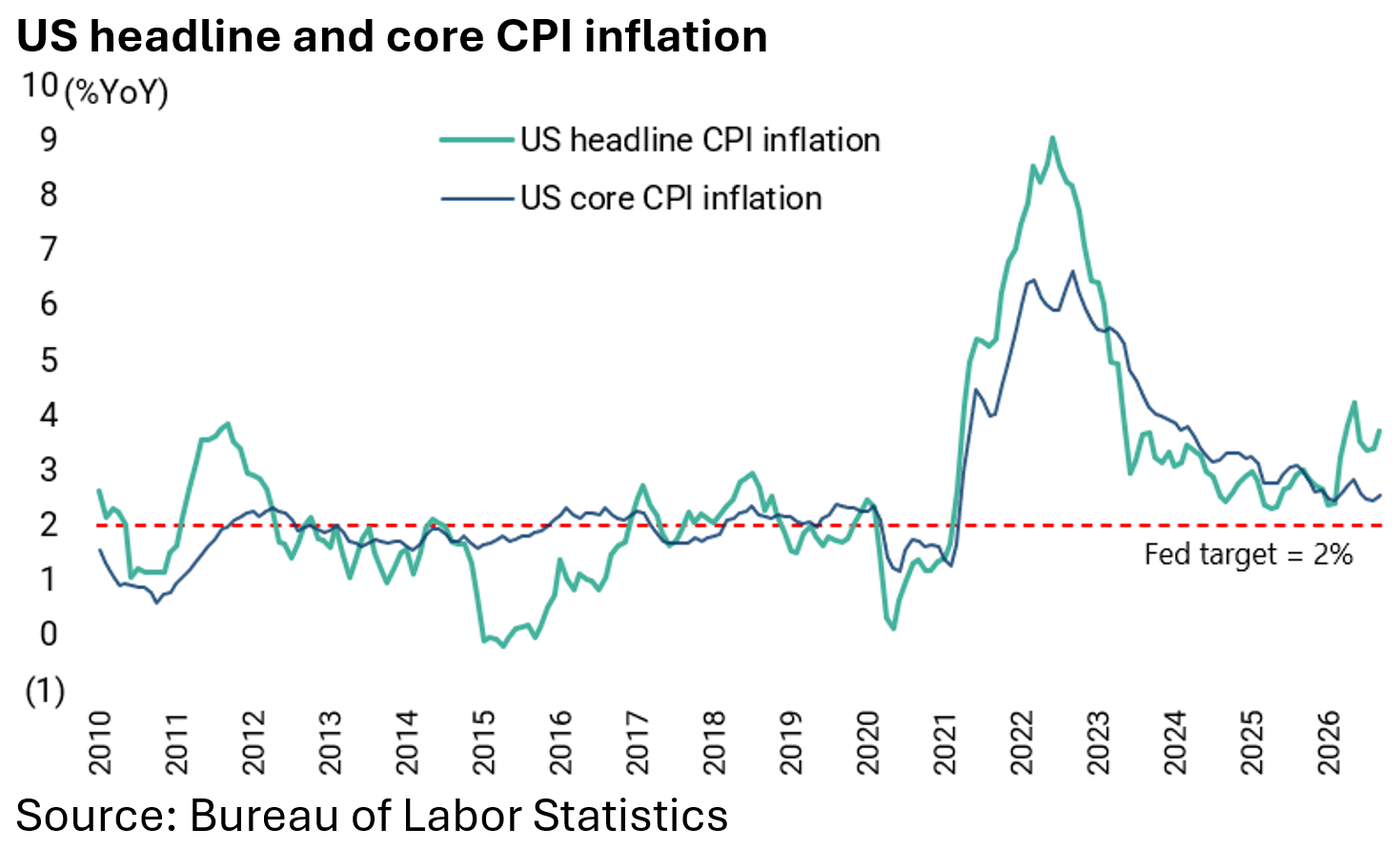
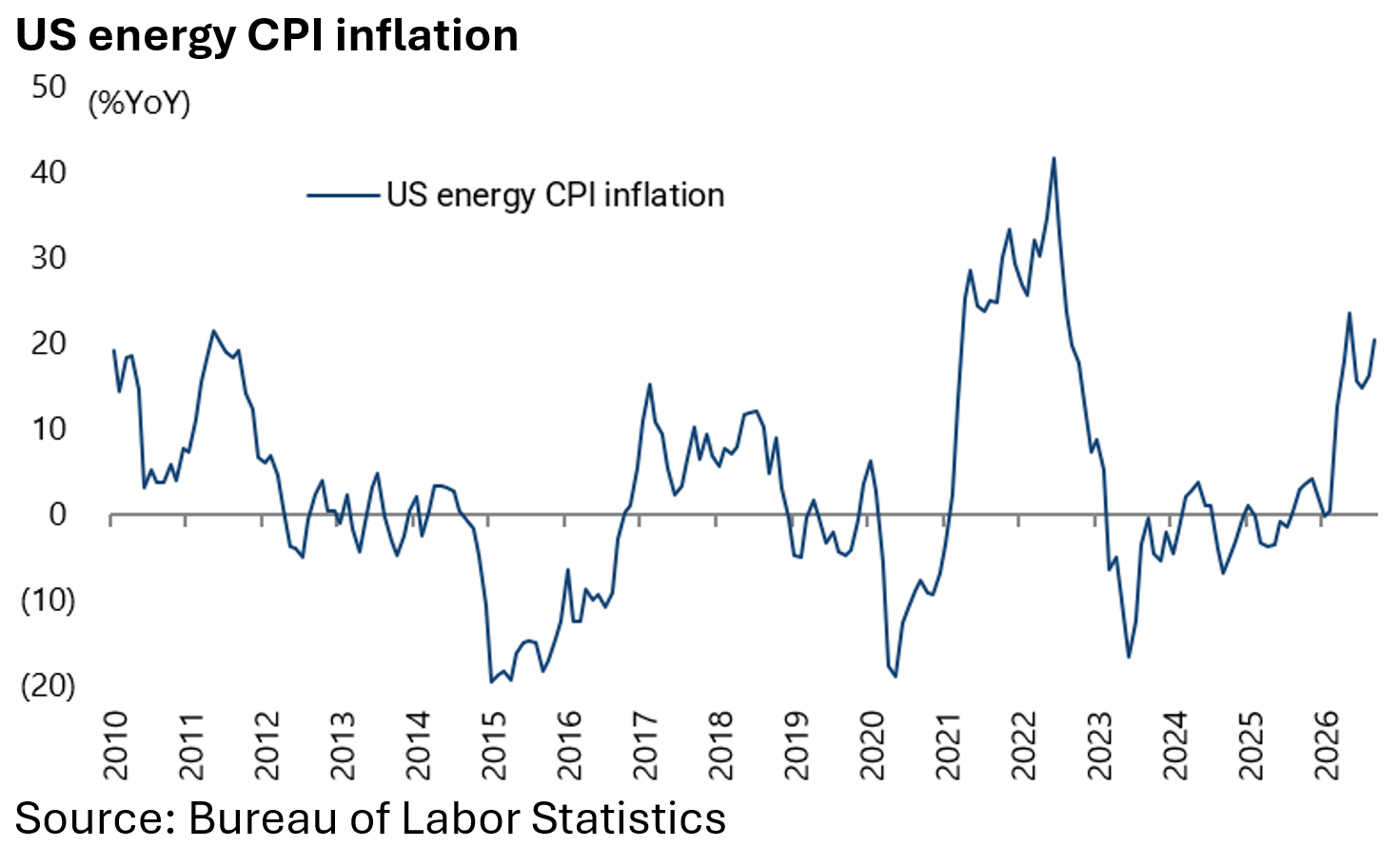
As for energy-related cost pressures, energy CPI surged by 20.4% YoY in September, up from 16.3% YoY in August.
The views expressed in Chris Wood’s column on Grizzle reflect Chris Wood’s personal opinion only, and they have not been reviewed or endorsed by Jefferies. The information in the column has not been reviewed or verified by Jefferies. None of Jefferies, its affiliates or employees, directors or officers shall have any liability whatsoever in connection with the content published on this website.
The opinions provided in this article are those of the author and do not constitute investment advice. Readers should assume that the author and/or employees of Grizzle hold positions in the company or companies mentioned in the article. For more information, please see our Content Disclaimer.
About Author