



It remains surprising the degree to which markets have remained calm since the original US-Israel attack on Iran on 28 February.
The VIX has peaked at only 35.3 so far in this Iran-war-triggered cycle, compared with a peak of 60.1 following the tariff announcement in April last year, and is now 18.6.
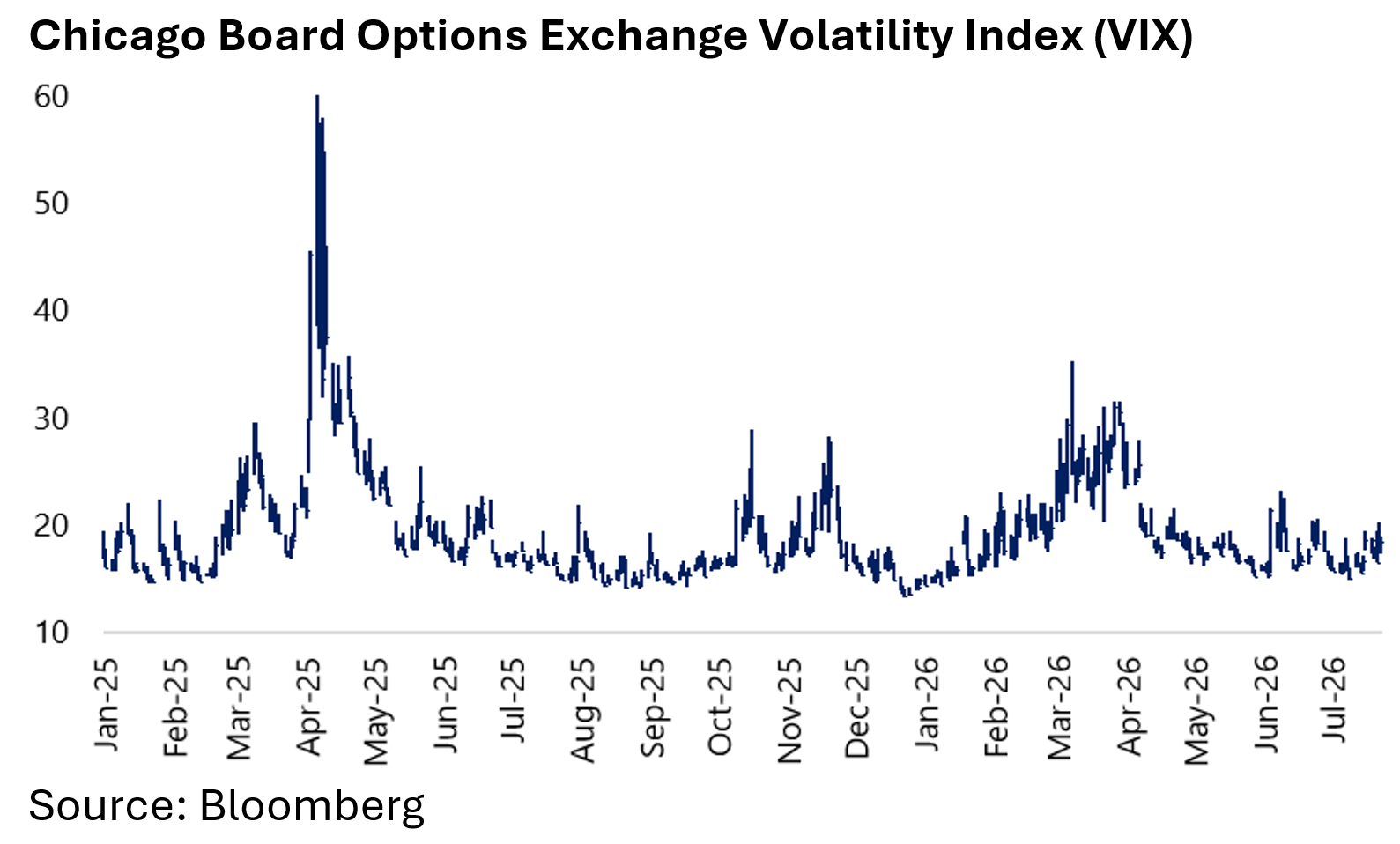
Still, the risk of renewed Iran-triggered market turmoil is clearly rising though experience has shown that yet another Trump U-turn can happen at any time.
In that respect, wags have called it the Memorandum of Misunderstanding.
But that assumes the 47th president actually read the 14-point MoU signed by the US and Iran on 17 June.
This writer severely doubts that.
Donald Trump actually signed it during a dinner with French President Emmanuel Macron at the Palace of Versailles.
What is clear is that outright conflict has resumed between the US and Iran of late and that Donald Trump, the man who got elected on the “no more wars” agenda, is in a trap of his own making in the sense that this writer’s base case is that Iran will be able to keep the Strait essentially closed and that time is on its side in terms of the growing impact of energy-related shortages.
Meanwhile, those on the Iranian side who favoured negotiations will have been discredited since the terms of the MoU were never honoured from almost the start of the supposed 60-day negotiation period.
On the issue of the Strait itself, the MoU states that Iran will “make arrangements using its best efforts for the safe passage of commercial vessels, with no charge for 60 days only”.
For this reason, this writer hears that real control in Iran is now firmly in the grip of Ahmad Vahidi, the Commander-in-Chief of the Islamic Revolutionary Guard Corps (IRGC), in terms of the management of the Strait of Hormuz and the related military strategy.
By contrast, the position of Iranian President Masoud Pezeshkian will have been further weakened.
Iran’s Reprisals are a Signal to Gulf States
Meanwhile the Iran response in terms of its renewed attacks on US bases in the Gulf, in response to the 13 consecutive nights of US attacks on Iran before they stopped on 24 July, is sending the message to the Gulf states that the “you are either with us or against us” in terms of allowing US military bases to operate in their countries.
In this respect, the Tehran agenda is increasingly clear.
That is that it wants the US presence out of the region.
Whereas for the Gulf states themselves, they must increasingly be asking themselves what exactly the US security guarantee is getting them in the sense that they are being attacked almost because of that presence.
In this respect, there has been an interesting divergence of late between the stance of Saudi Arabia and the UAE.
Most importantly, Riyadh has not allowed its territory to be used for the latest US strikes. Saudi’s strategic position had also been improved by the fact that it has been using its East-West pipeline to Yanbu on the Red Sea.
But that is no longer the case as the Houthis are now blocking Saudi ships’ access to the Red Sea.
This writer will not get further into the details of Middle East politics, save to note that they are fiendishly complicated.
This is why negotiations should be delegated to professionals in America’s diplomatic corps which is certainly not the approach of the Trump administration which has essentially been flying blind.
Recent US Bombings Directly Attacked China’s Interests
Meanwhile, it should be noted that the renewed American attacks have involved one major escalation which has directly attacked China’s interest.
This is because the US badly damaged Aq Tekeh Khan Railway Bridge in Aqqala in northern Iran which is part of the railroad linking Tehran to Xi’an in Western China via Central Asia which became operational in May 2025.
The important point to note is that, aside from its logistical importance, this railway was built and financed by China. The other major American escalation was the bombing of the port of Chabahar.
This is about 300 miles from the Strait of Hormuz and is on the Gulf of Oman only 62 miles from the Pakistani border.
All of the above must be distressing to the Pakistani negotiators who spent so much time in negotiating the original MoU.
This is why the official line is that the MoU is “suspended rather than irretrievably extinguished”.
But this writer has a very hard time believing in that outcome.
Clearly, the Donald can do a U-turn at any time, and indeed is very likely to do so.
But that is not a reason for the other side to commit to renewed negotiations given the by-now chronic loss of trust.
How Has the Market Shrugged off Iran?
Meanwhile, there seems to be a fundamental division within the Trump administration between Vice President JD Vance and Secretary of State Marco Rubio.
The former clearly has isolationist sympathies as reflected in his stress on “no more wars” during the presidential campaign, while the latter is the nearest thing to a neo-con in the current administration.
As for Trump, he flirts between either position as, unfortunately, at the end of the day he remains a conceptual vacuum who, when it comes to the Iran issue, is desperate for an “out”.
Meanwhile, there have been two key reasons for the market resilience in recent months.
The first is that the Treasury bond market has been relatively calm, as reflected in a renewed decline in bond volatility after the MOVE index’s biggest one-day gain since October 2020 on 20 March on the original invasion.
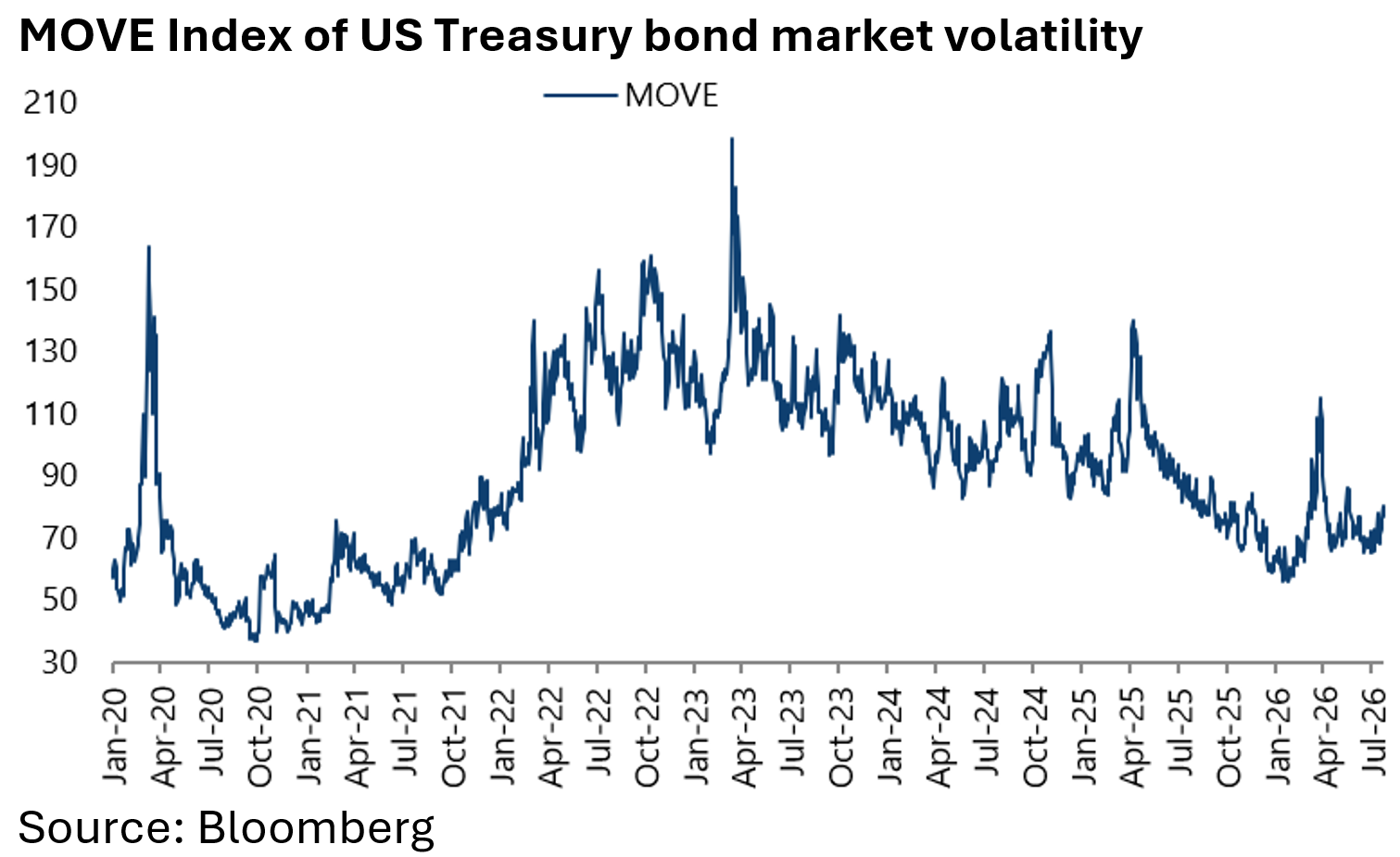
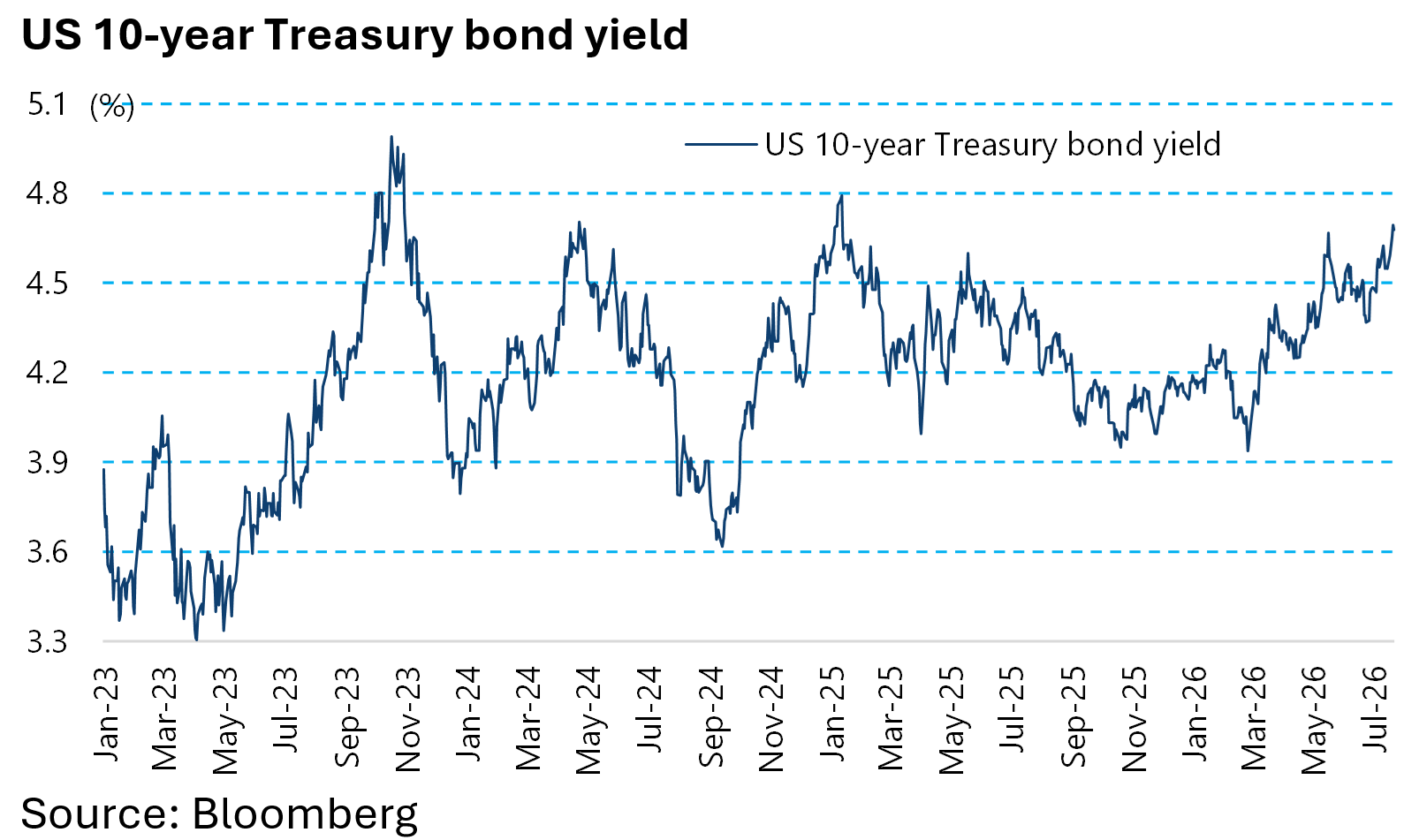
But that is now changing again with the ten-year bond yield now at its highest level since January 2025.
Second, and more important from a narrow equity standpoint, has been the continuing upward trend in earnings revisions, particularly in the tech sector.
The LSEG I/B/E/S consensus data as of 17 July shows that S&P500 2Q26 earnings are expected to rise by 26.0% YoY, up from 12.8% growth expected last October.
The IT sector now has the second highest forecast 2Q26 earnings growth of 65.6% YoY, up from 24% last October. The IT sector is expected to earn US$220.5bn in 2Q26, up from US$133.1bn in 2Q25, with all 12 sub-industries in the sector having higher earnings than a year ago.
Unsurprisingly, the semiconductors and technology hardware, storage & peripherals sub-industries have the highest earnings growth (145.2% and 46.5%, respectively).
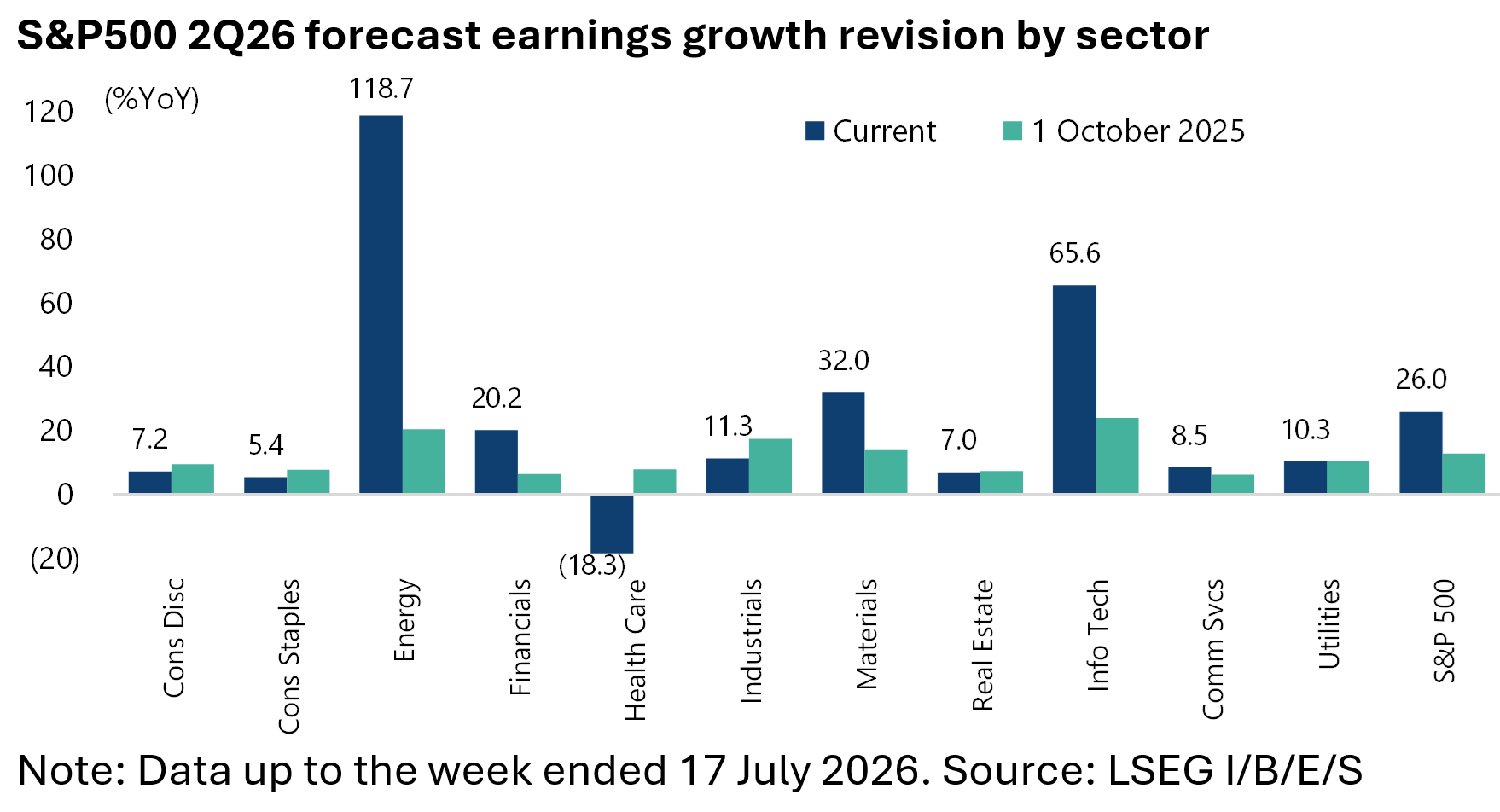
The above data highlights the importance of the tech hardware sector in driving overall earnings.
Indeed, earnings for the tech sector account for 31% of the I/B/E/S forecast 2Q26 earnings for the S&P500.
All this shows the continuing critical importance of the now three-and-a-half-year-old AI capex cycle in terms of driving earnings growth and, therefore, the US stock market.
Nvidia and the HyperScaler 4 Trade on Lowest PE Since the AI Era Began
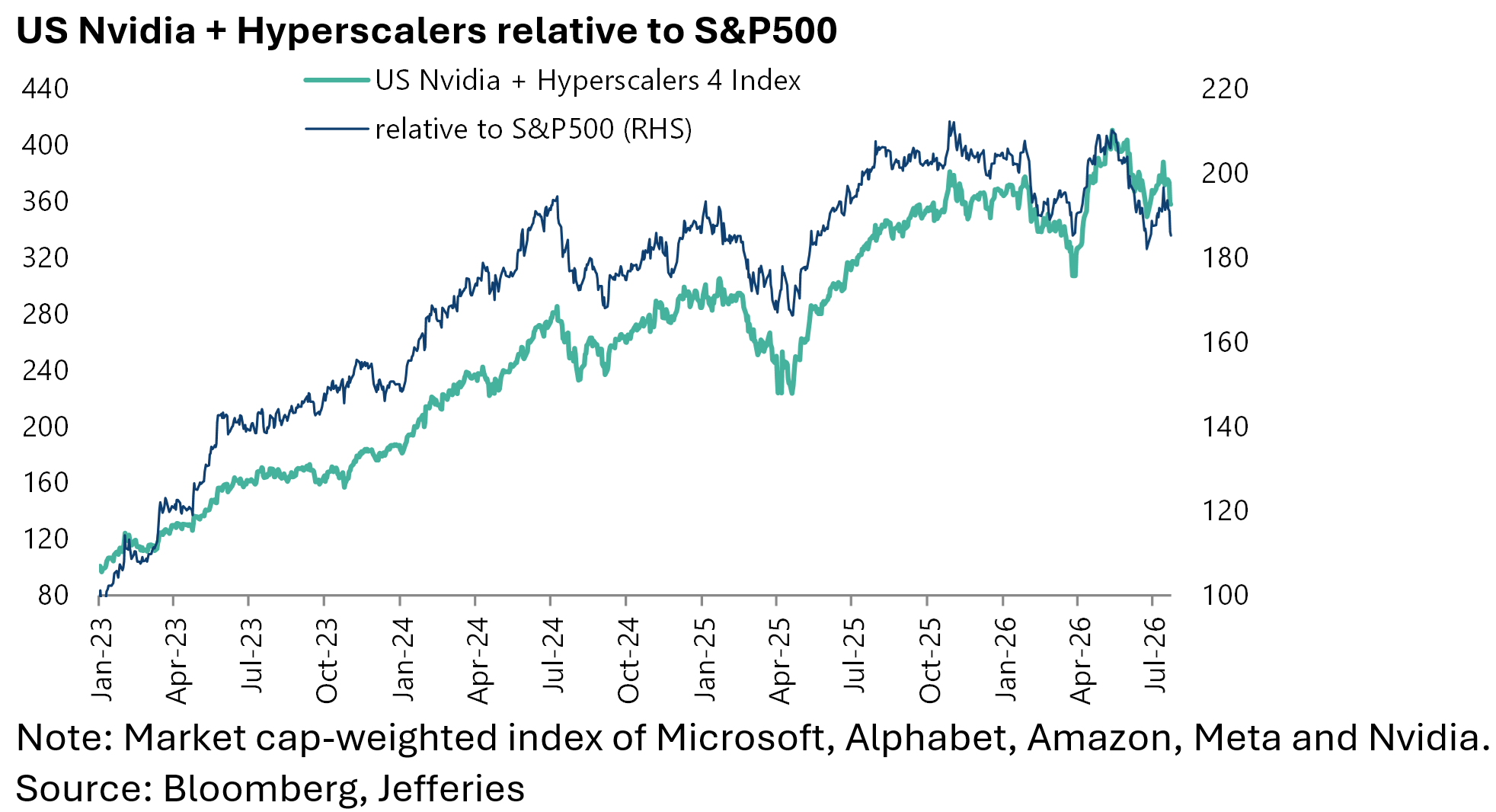
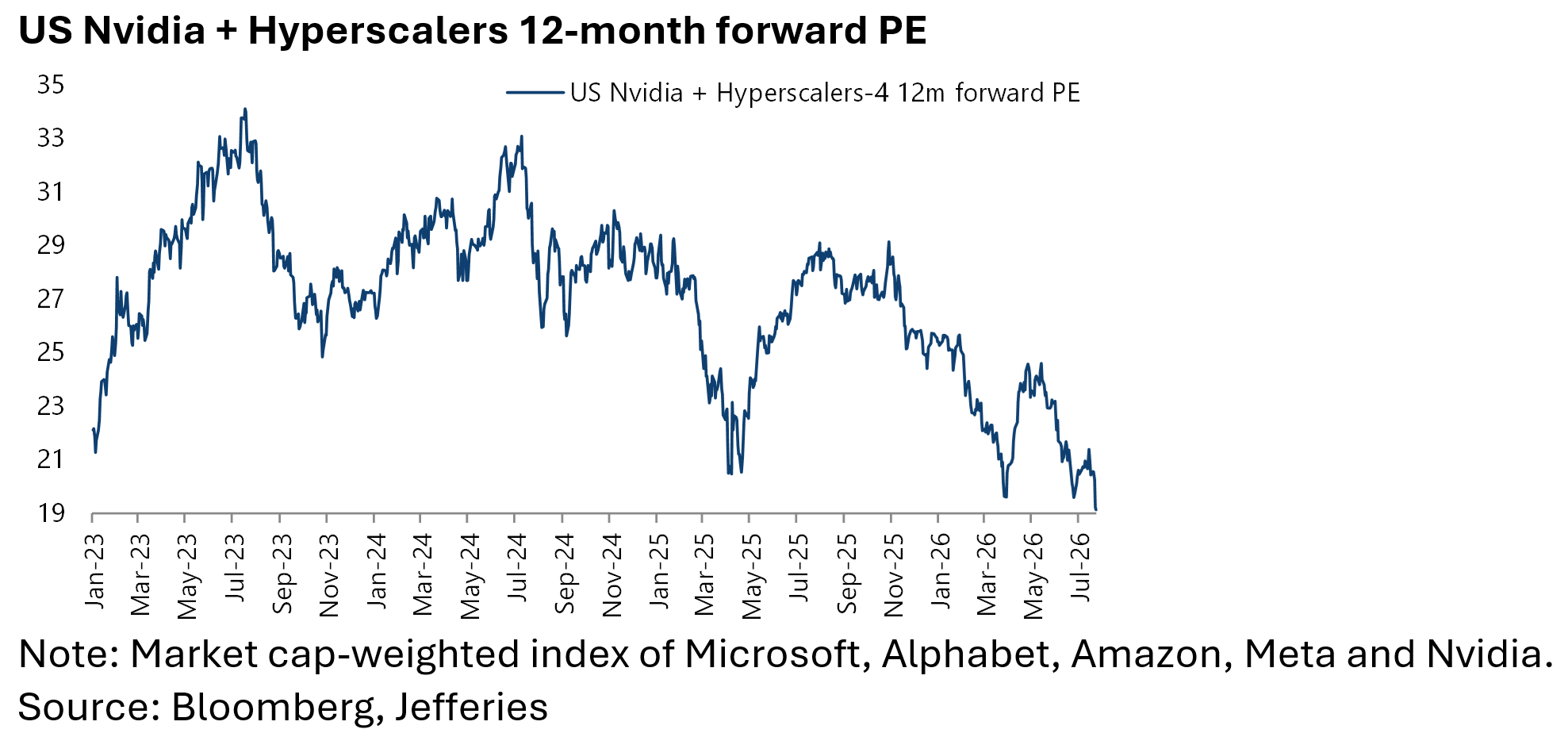
Meanwhile the continued robust earnings expectations, combined with the relative underperformance of Nvidia and the four hyperscalers in most of the past nine months, means they have de-rated in valuation terms on a forward earnings basis.
Nvidia and the four hyperscalers now trade on 19.1x 12-month forward earnings, down from 29.1x in late October.
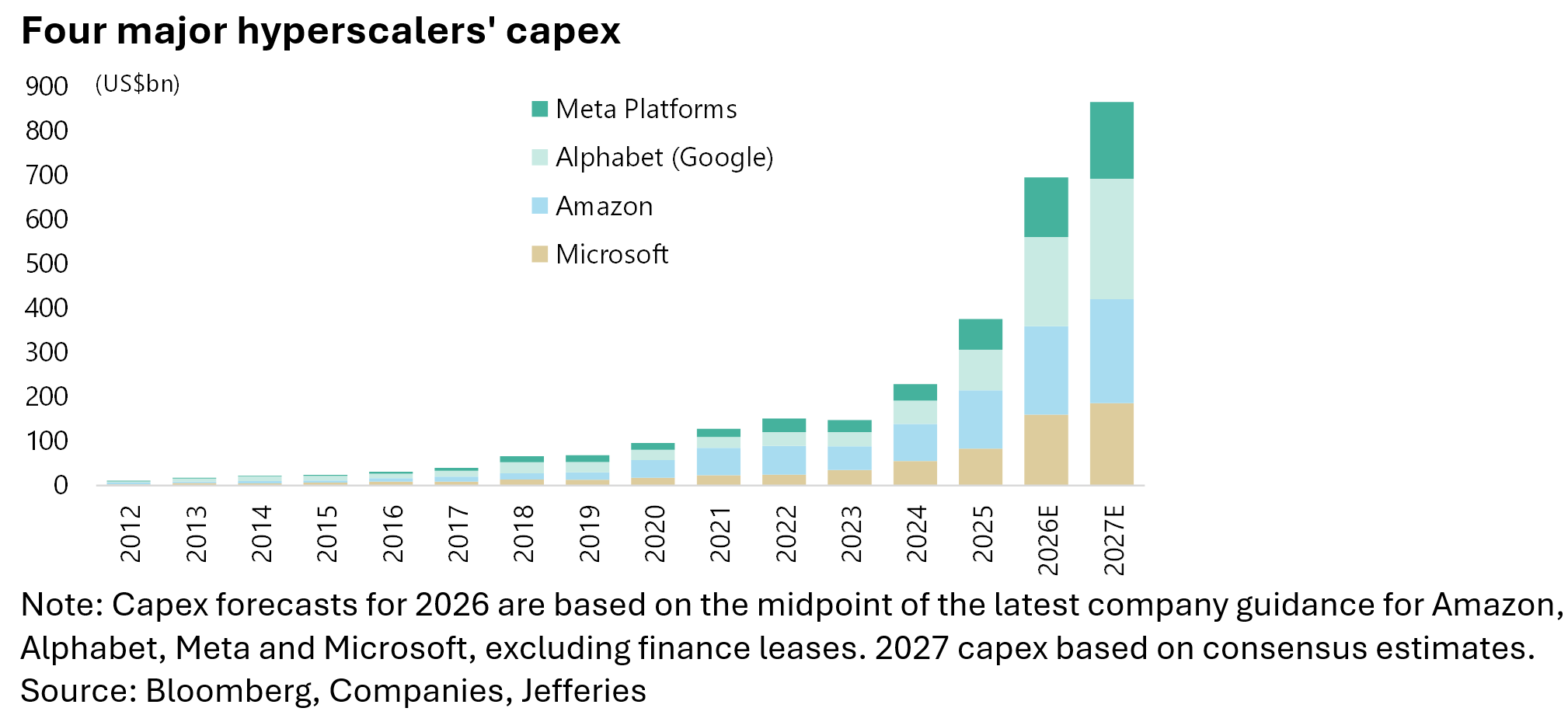
Does this mean they have become a massive buy or does it mean, as is this writer’s base case, that the market has started to question whether adequate returns will be made on the gigantic amounts being invested by the four hyperscalers projected at US$695bn this year and US$870bn next year.
This is why the continuing relative and absolute performance of the hyperscalers remains critical to monitor.
Meanwhile, this writer also remains of the view that the key fault line to monitor in financial markets is the 10-year Treasury bond, most particularly as it has just broken out of the tight trading range it has been in for most of the past several quarters.
Trump’s Polling Numbers are Bad and Continuing to Get Worse
Finally, the latest polling data also continues to show no pickup in support for the war and no relief for Trump’s negative ratings on the economy.
Rather the reverse. A Fox News poll conducted between 17-20 July found that 66% disapproved of the Trump’s handling of Iran, up from 64% in the previous poll conducted between 12-15 June. The same poll shows that 67% of Americans disapprove of Trump’s handling of the economy compared with only a 33% approval rating.
The views expressed in Chris Wood’s column on Grizzle reflect Chris Wood’s personal opinion only, and they have not been reviewed or endorsed by Jefferies. The information in the column has not been reviewed or verified by Jefferies. None of Jefferies, its affiliates or employees, directors or officers shall have any liability whatsoever in connection with the content published on this website.
The opinions provided in this article are those of the author and do not constitute investment advice. Readers should assume that the author and/or employees of Grizzle hold positions in the company or companies mentioned in the article. For more information, please see our Content Disclaimer.
About Author